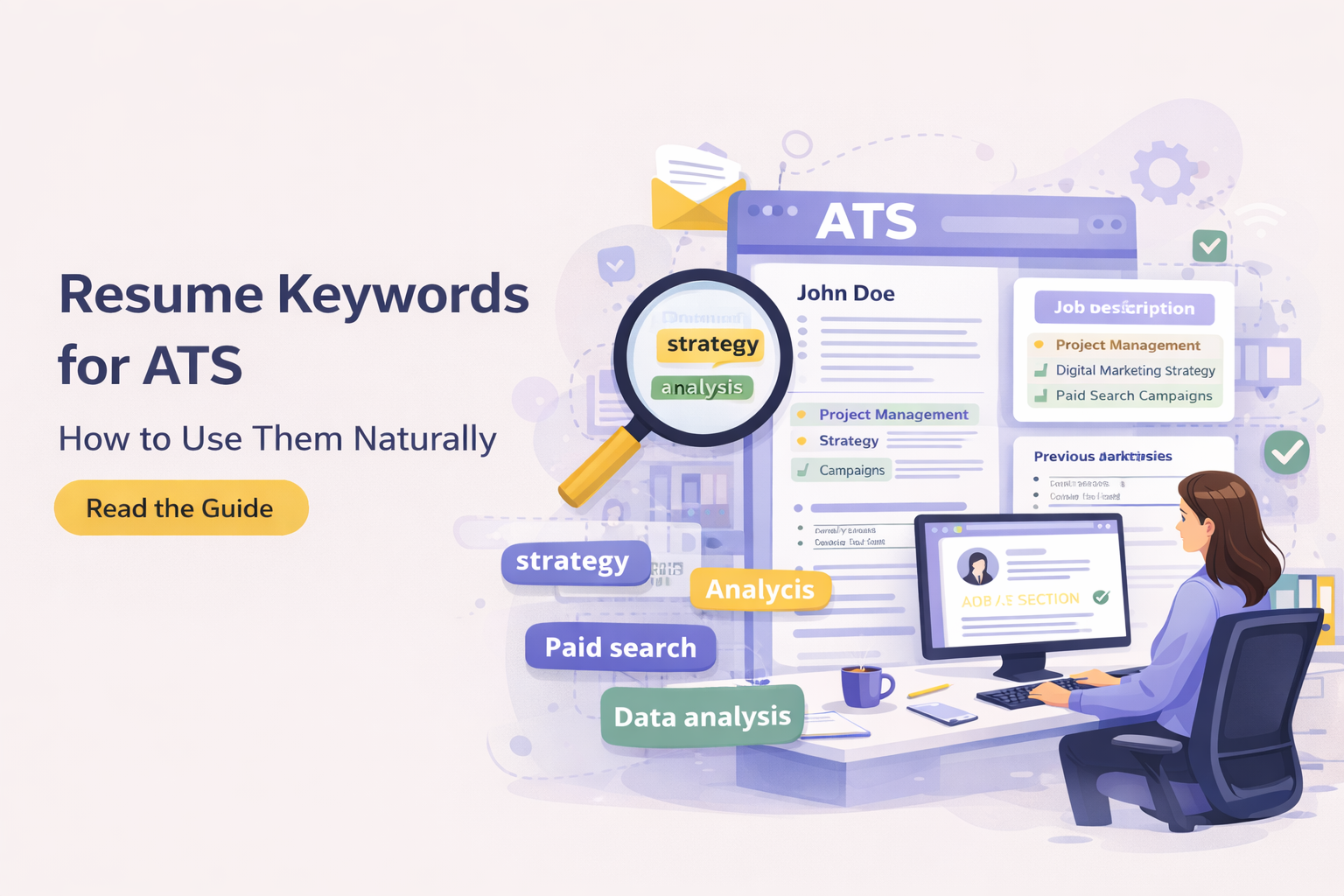
Коли люди чують, що системи відстеження кандидатів сканують резюме на наявність ключових слів, багато хто одразу припускає, що успіх залежить від додавання якомога більшої кількості термінів з опису вакансії. Це часто призводить до резюме, які здаються штучними, повторюваними або перевантаженими фразами, що звучать радше скопійовано, ніж заслужено. Насправді оптимізація ключових слів працює найкраще тоді, коли вона відображає справжню відповідність між досвідом кандидата та мовою, якою роботодавці описують посаду. Стратегія ключових слів спрацьовує найкраще, коли резюме вже побудоване за ширшими принципами створення резюме під ATS та сумісності документів.
Системи відстеження кандидатів не винагороджують безсистемне наповнення ключовими словами. Їхня мета — допомогти роботодавцям виявити резюме, які видаються релевантними вакансії на основі структури, термінології та контекстних сигналів. Резюме, що природно відображає мову посади й водночас залишається читабельним, зазвичай показує кращі результати, ніж те, що заповнене розрізненими термінами.
Тож стратегія ключових слів — це не про обман програмного забезпечення. Це про розуміння того, як системи найму класифікують релевантність, і про впевненість, що ваш реальний досвід описано так, щоб він відповідав сучасній мові рекрутингу.
Цей посібник пояснює, що таке ключові слова резюме, де вони важать найбільше, як визначити правильні з них і як інтегрувати їх природно, не послаблюючи довіру.
Що насправді означають ключові слова резюме
Ключові слова резюме — це слова та фрази, які роботодавці неодноразово використовують, описуючи обов'язки, необхідні навички, інструменти, кваліфікації, сертифікати та результати, пов'язані з роботою.
Ці ключові слова зазвичай зустрічаються в:
- назвах посад
- необхідних кваліфікаціях
- вимогах до програмного забезпечення
- технічних навичках
- методологіях
- сертифікатах
- галузевих термінах
- обов'язках на посаді
Наприклад, у вакансії з маркетингу можуть неодноразово згадуватися:
- SEO
- Google Analytics
- оптимізація кампаній
- платний пошук
- генерація лідів
- звітність про ефективність
У фінансовій вакансії можуть наголошувати на:
- прогнозуванні
- плануванні бюджету
- аналізі відхилень
- фінансовому моделюванні
- звітності про відповідність вимогам
Системи відстеження кандидатів часто порівнюють завантажені резюме з цими шаблонами, оскільки роботодавці хочуть швидко виявити кандидатів, чий досвід видається релевантним.
Що сильніша відповідність між мовою резюме та мовою вакансії, то легше системі класифікувати релевантність.
Чому ключові слова важливі в системах відстеження кандидатів
Системи відстеження кандидатів не "розуміють" якість кар'єри так, як це роблять рекрутери. Спершу вони інтерпретують текстові шаблони.
Рекрутер одразу розпізнає, що формулювання "керував стратегією міжнародного придбання платних медіа" чітко відповідає лідерству в цифровій рекламі, навіть якщо точної фрази "менеджер з ефективнісного маркетингу" немає.
Програмне забезпечення ж часто більш безпосередньо залежить від розпізнаваних сигналів.
Це означає, що якщо в описі вакансії неодноразово використовується "оптимізація кампаній", а у вашому резюме сказано лише "покращив результати кампаній", релевантність може бути частковою, але відповідність — слабшою.
Що ближче ваша мова відображає те, як роботодавці описують посаду, то ймовірніше, що ваше резюме згодом стане доступним для пошуку в базах даних рекрутерів.
Це важливо, адже багато рекрутерів не переглядають кожне резюме вручну. Часто вони шукають у базах даних ATS за ключовими словами вже після того, як надійшли заявки.
Тож ваше резюме має працювати як на етапі подачі, так і на етапі пошуку.
Де в резюме мають з'являтися ключові слова
Ключові слова важать найбільше, коли вони з'являються в змістовних розділах, а не в ізольованих списках. Навіть сильні ключові слова можуть втратити цінність, якщо опиняться в погано структурованих розділах, тому при розміщенні навичок і досягнень досі важливими залишаються рішення щодо безпечного для ATS форматування.
Найсильніші місця — це:
Професійне резюме (summary)
Короткий вступний блок створює ранній семантичний контекст.
"Ефективнісний маркетолог із 7-річним досвідом керування платним пошуком, платним соціальним просуванням, оптимізацією кампаній та стратегіями кросканального придбання."
Це одразу природно вводить мову, релевантну посаді.
Досвід роботи
Ключові слова стають найсильнішими, коли їх підкріплено доказами.
"Очолював оптимізацію кампаній в акаунтах Google Ads і Meta Ads, знизивши CPA на 18% і водночас збільшивши обсяг лідів."
Тут ключове слово з'являється всередині вимірюваного доказу.
Розділ навичок
Розділ навичок допомагає чітко закріпити термінологію. Він має залишатися структурованим і конкретним:
- Google Ads
- Meta Ads
- GA4
- Looker Studio
- дослідження ключових слів
- оптимізація стратегії ставок
Сертифікати
Сертифікати часто містять сигнали, які роботодавці активно шукають. Наприклад:
- сертифікація Google Ads
- Meta Certified Media Buying Professional
Чому надмірне наповнення ключовими словами часто зазнає невдачі
Багато резюме зазнають невдачі, бо кандидати надмірно реагують на поради щодо ATS. Вони копіюють фрази безпосередньо з описів вакансій, не інтегруючи їх природно.
Це створює текст на кшталт:
"Лідерство лідерство управління проєктами комунікація зі стейкхолдерами лідерство стратегічне планування лідерство."
Це послаблює і результативність в ATS, і довіру рекрутера. Сучасні системи дедалі частіше оцінюють контекстне вживання, а не лише голе повторення.
Рекрутери також одразу помічають неприродне письмо.
Найсильніші резюме вживають ключові слова один-два рази в релевантному контексті, а не повторюють їх надмірно. Одне сильне речення часто працює краще, ніж п'ять штучних вставок.
Як визначити правильні ключові слова з опису вакансії
Найнадійніший метод простий: прочитайте вакансію кілька разів і визначте повторювані формулювання.
Слова, що зустрічаються кілька разів, зазвичай важать найбільше. Звертайте увагу на:
- назву посади
- необхідне програмне забезпечення
- ключові обов'язки
- вимірювані результати
- лінії підпорядкування
- технічні методи
- сертифікати
Якщо п'ять описів схожих посад неодноразово згадують:
- управління стейкхолдерами
- міжфункціональну співпрацю
- звітність за KPI
то це, найімовірніше, сильні цільові ключові слова.
Закономірності в кількох оголошеннях зазвичай сильніші, ніж окремі слова з однієї вакансії. Це допомагає створювати резюме, які залишаються придатними для повторного використання в схожих заявках.
Технічні навички проти м'яких навичок у стратегії ключових слів для ATS
Технічні навички зазвичай мають більшу цінність для ATS, бо їх легше класифікувати. Приклади:
- SQL
- Python
- Adobe Photoshop
- Salesforce
- Google Ads
- фінансове прогнозування
М'які навички теж важливі, але вони зазвичай мають з'являтися всередині доказів, а не в ізольованих списках. Замість того щоб писати:
- лідерство
- комунікація
- адаптивність
сильніше написати:
"Очолював міжфункціональну команду з п'яти осіб, що забезпечувала квартальні покращення звітності на регіональних ринках."
Це природно демонструє лідерство.
Чому назви посад важать більше, ніж очікують кандидати
Назви посад часто діють як ключові слова з високою вагою. Якщо ваша внутрішня назва посади відрізняється від ринкової мови, стратегічне уточнення допоможе.
Наприклад, замість:
Growth Specialist II
можна написати:
Growth Specialist II (ефективнісний маркетинг)
Це зберігає правдивість, додаючи впізнаваності. Назви допомагають системам ATS швидко класифікувати релевантність посади. Рекрутери також спершу переглядають саме назви.
Синоніми можуть посилити пошукову помітність резюме
Різні роботодавці використовують різну мову для схожої роботи. Наприклад:
- підтримка клієнтів (Customer Support)
- клієнтська підтримка (Client Support)
- успіх клієнтів (Customer Success)
або:
- платний пошук (Paid Search)
- пошукова реклама (Search Advertising)
- SEM
Природне варіювання формулювань у різних місцях резюме може покращити охоплення пошуку.
Це має залишатися чесним і контекстним. Не вигадуйте термінологію, якою ви ніколи не користувалися професійно. Але там, де синоніми справді доречні, вони посилюють виявлюваність.
Розділ навичок важливий, але його недостатньо
Деякі кандидати вважають, що довгий розділ навичок вирішує питання оптимізації ключових слів. Це не так.
Системи відстеження кандидатів часто цінують контекст. Якщо ключове слово з'являється лише в блоці навичок, але ніколи — у досвіді роботи, релевантність може видаватися слабшою.
Наприклад, "Google Ads" лише в навичках слабше, ніж:
"Керував щомісячним бюджетом Google Ads у розмірі €120 000 у кампаніях з генерації лідів."
Друге надає довіри. Тож ключові слова мають з'являтися як у стислій формі, так і у формі доказу.
Як ResumeCraftor допомагає з балансом ключових слів
Один із головних викликів для кандидатів — зрозуміти, чи звучить резюме природно, водночас охоплюючи достатньо мови, релевантної посаді. Саме тут стає корисним структурований аналіз.
ResumeCraftor допомагає знайти баланс між ясністю, мовою посади та читабельністю для ATS, щоб резюме залишалося зрозумілим для людини й водночас покращувало машинну сумісність.
Найсильніші резюме ніколи не будуються лише навколо програмного забезпечення. Вони будуються навколо чіткої професійної комунікації, яку здатне зрозуміти й програмне забезпечення.
Поширені помилки з ключовими словами, що знижують якість резюме
Кілька помилок неодноразово послаблюють навіть сильні резюме.
Одна з них — копіювання повних описів вакансій. Інша — вставлення технічних термінів, не пов'язаних із реальним досвідом. Третя — перевантаження вступного блоку, тоді як історія роботи лишається загальною.
Ще одна часта проблема — ігнорування мови, що позначає рівень посади. Наприклад:
- менеджер
- лід
- керівник
- директор
Ці слова важливі, бо роботодавці часто шукають за рівнем старшості. Кандидати мають чітко відображати свій справжній рівень там, де це обґрунтовано.
Чому кожну заявку варто трохи коригувати
Універсальне резюме зазвичай упускає можливості. Навіть невеликі коригування ключових слів покращують відповідність.
Це не означає переписувати все щоразу. Часто достатньо змінити формулювання вступного блоку, переставити навички та трохи скоригувати формулювання досягнень.
Резюме стає сильнішим, коли воно відображає мову конкретної можливості, не втрачаючи автентичності.
Підсумкові думки
Ключові слова резюме важливі, бо системам найму потрібні мовні сигнали ще до того, як відбудеться глибша оцінка.
Але самі лише ключові слова не створюють успіху. Найсильніші резюме поєднують релевантність ключових слів із доказами, читабельністю та правдивим професійним позиціонуванням.
Ключове слово ніколи не повинно здаватися вставленим. Воно має сприйматися як природний опис роботи, яку ви справді виконували.
Саме на це найкраще реагують і системи ATS, і рекрутери.
Поширені запитання
Що таке ключові слова резюме для ATS?
Це слова та фрази, якими роботодавці описують навички, інструменти й кваліфікації, релевантні для певної посади.
Скільки ключових слів має містити резюме?
Достатньо, щоб природно відобразити справжню відповідність, без повторень.
Чи мають ключові слова точно збігатися з описом вакансії?
Важливі терміни повинні бути близькими за змістом, але природне формулювання важливіше за дослівне копіювання.